South African iron ore exporters face a squeeze on their price premium
Rising freight costs and a shift to pellets threaten the lump-ore advantage that has protected Kumba and ARM
South Africa's iron ore exporters, led by Kumba Iron Ore and African Rainbow Minerals' Assmang, could see the premium they earn over benchmark prices come under pressure, according to analysis from RMB Morgan Stanley cited in October 2025. The bank pointed to three converging market shifts that together threaten to erode a pricing advantage the industry has long relied on.
Three pressures at once
The first is freight cost. As China's steel industry increasingly dominates global iron ore demand, taking around 65% of South Africa's exports compared with roughly 50% historically, the cost of shipping ore the long distance from Saldanha Bay has become a bigger drag on netback prices. The second is a shift in steelmaker preferences: mills are increasingly favouring pelletised ore, which uses less coking coal in the blast furnace, over the lumpy ore that South African mines are known for. The third is a market re-rating of impurities, in which silica is being penalised more heavily while alumina content is valued more highly, a change that does not favour typical South African ore chemistry.
Kumba's own numbers illustrate the stakes. The company produces between 35 and 37 million tonnes of iron ore a year, with roughly two-thirds sold as lumpy ore rather than fines. In the first half of 2025 it achieved an average price of $91 a tonne against an $84 benchmark, a premium of roughly 8%, at a time when iron ore futures in Singapore were trading around $103 a tonne.
Why the premium matters so much
The sensitivity of South African miners' earnings to price swings is unusually high. RMB Morgan Stanley calculated that every $10 a tonne change in netback price moves Kumba's EBITDA by about 20%, ARM's by roughly 10%, and Exxaro's — which holds a minority stake in Kumba's Sishen mine — by about 2%. That makes the quality premium Kumba's ore commands, thanks to its roughly 64% iron content, an important buffer against a soft benchmark price rather than a nice-to-have.
Kumba chief executive Mpumi Zikalala has defended the position of South African ore even as competition intensifies from lower-cost, higher-volume producers such as Rio Tinto, Vale and the newly ramping Simandou project in Guinea. “We only produce five percent of world iron ore, but where we trump them is that quality of our iron ore,” she said, according to Miningmx.
What it means for the sector
If the premium narrows as freight costs rise and pellet demand grows, South African miners will need to lean even harder on ore quality and cost control to protect margins. It also raises the stakes for projects such as Kumba's ultra-high dense-media separation investment at Sishen, which is designed specifically to lift the share of premium, higher-value product the mine can sell.
Sources
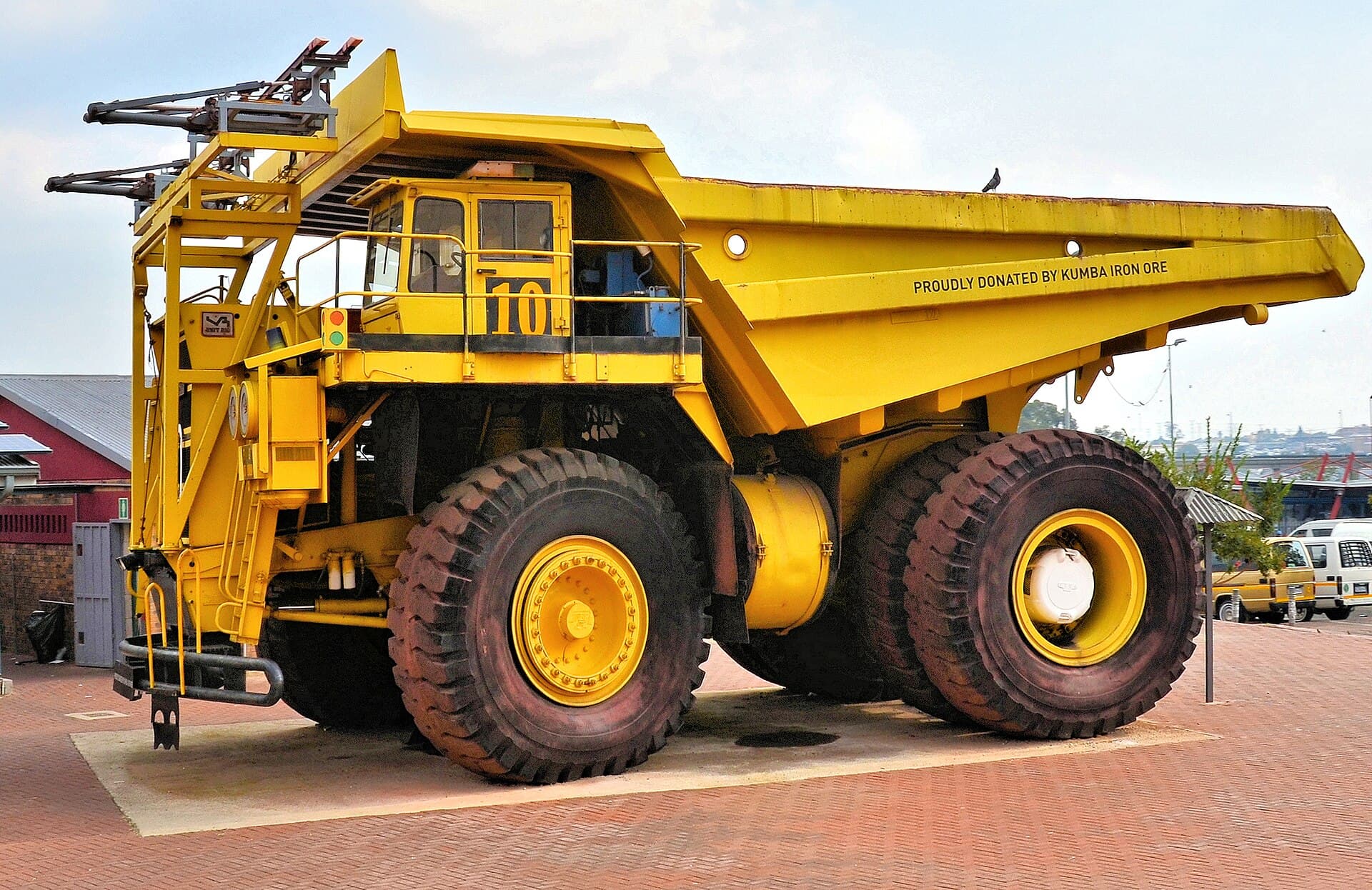
Photo: A retired Kumba Iron Ore haul truck on display in Johannesburg. Ossewa, Wikimedia Commons, CC BY-SA 4.0.
Was this useful?
More from MiningWrap

Transnet's rail recovery lifts coal and iron-ore exports to three-year high
The whole sector in one weekly read.
Deals, policy and markets — every Thursday.
Discussion
Loading comments…