Transnet's May shutdown cuts Kumba's ore railings by 8% in second quarter
Sishen lifts output as Kolomela's planned slowdown and heavy rain weigh on the half

Kumba Iron Ore's second-quarter update shows how closely the miner's fortunes are tied to the heavy-haul ore railway between the Northern Cape and Saldanha Bay. In its production and sales report for the quarter to 30 June, published on 23 July, the company said ore railed to port fell 8% quarter on quarter to 8.9 million tonnes, from 9.7 million tonnes in the first quarter.
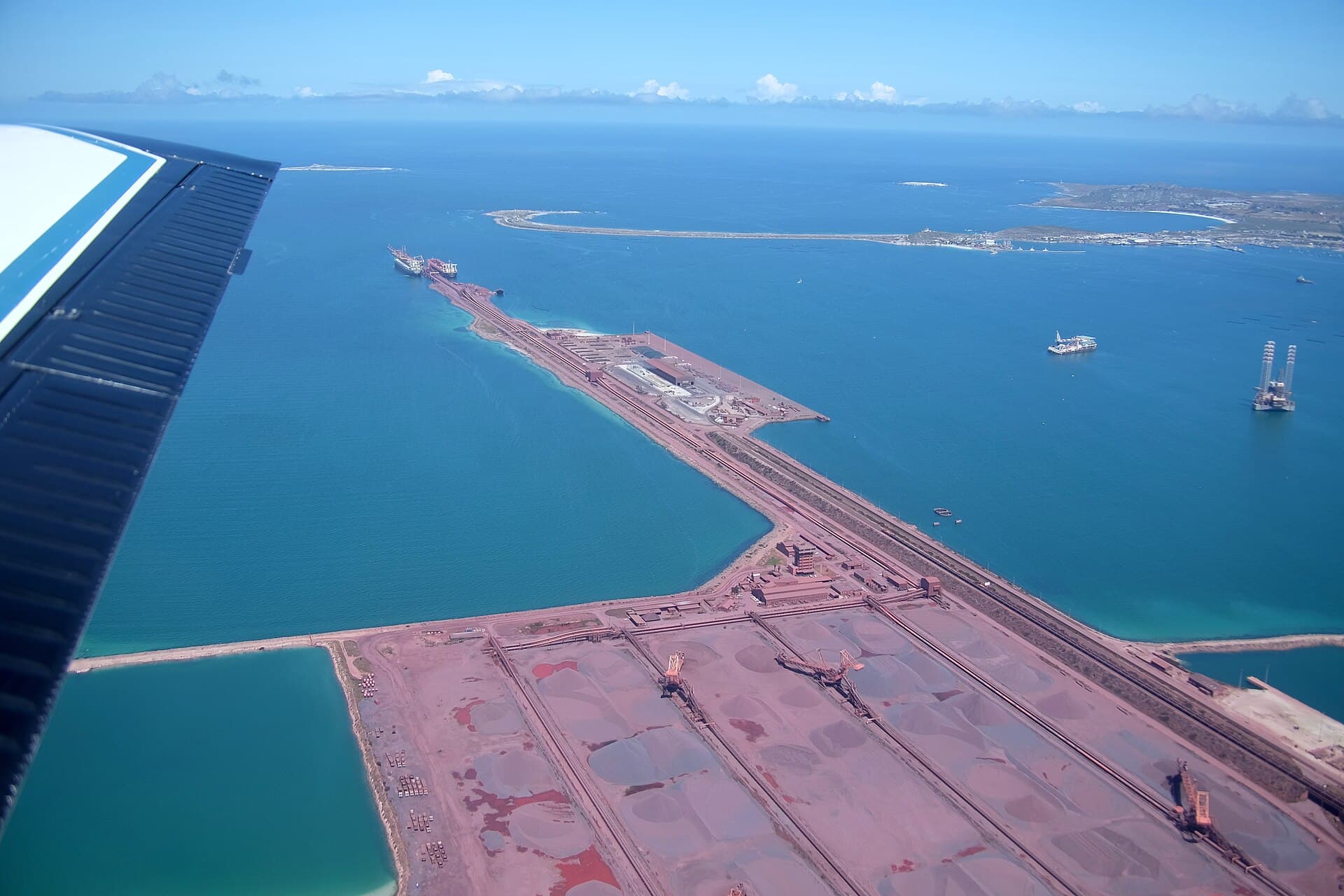
The dip followed a planned ten-day maintenance shutdown by Transnet in May, carried out under the Ore Corridor Restoration programme. Kumba said the work replaced 101km of rail, lifted speed restrictions on 26km of line, and included cold commissioning of Tippler 3 at the Saldanha Bay terminal. A second ten-day shutdown is planned for the second half of the year.
Mine by mine
Group production for the half fell 3% to 17.7 million tonnes, with the second quarter flat on the first at 8.8 million tonnes. Sales for the half slipped 1% to 18.6 million tonnes.
- Sishen produced 12.7 million tonnes in the half, 3% more than a year earlier, including 6.5 million tonnes in the second quarter. Waste mining was 5% lower at 64.4 million tonnes.
- Kolomela produced 4.9 million tonnes, 16% less, in line with a plan that front-loads waste stripping. Its waste mining rose 55% to 19.1 million tonnes.
Total waste movement rose 4% to 83.5 million tonnes, and the second quarter alone was 13% stronger than the first, despite above-average rainfall.
Stock shifts toward the port
Finished stock fell to 7.0 million tonnes from 7.5 million tonnes at the end of December. Stock held at the mines dropped to 4.8 million tonnes, while stock at Saldanha rose to 2.2 million tonnes from 1.8 million tonnes. That rebalancing matters because Kumba plans to sell more than it mines this year while Sishen's plant is being converted to ultra-high dense media separation technology, and the stockpile is the buffer.
The realised free-on-board price averaged $90 per wet metric tonne against a Fastmarkets 62% Fe benchmark of $83. Average iron content eased to 63.6% Fe from 64.1%, and the lump-to-fines ratio was 66:34.
Guidance intact, costs under watch
Kumba kept its 2026 targets of 31 to 33 million tonnes of production, 35 to 37 million tonnes of sales and 180 to 195 million tonnes of waste. Unit cost guidance is R530 to R560 a dry tonne at Sishen and R430 to R460 at Kolomela, with capital spending of R13.2bn to R14.2bn. The company raised its exchange-rate assumption to R16.50 to the dollar from R16.00, and warned that fuel and other input costs linked to the Middle East conflict, together with a firm rand, were pushing unit costs up.
Safety improved, with the total recordable injury frequency rate falling to 0.80 from 1.18. Sishen has now gone more than ten years without a fatality.
Sources
- Anglo American Kumba Iron Ore: Kumba Production and Sales Report for the second quarter ended 30 June 2026, 23 Jul 2026
- Miningmx: Worst rain in decades dampens Kumba Iron Ore earnings, 21 Jul 2026
Photo: An iron ore train on the Sishen–Saldanha railway line in South Africa. Abri le Roux / abrileroux -at- gmail.com. MSGJ at English Wikipedia, Wikimedia Commons, CC BY-SA 3.0.
Was this useful?
More from MiningWrap
Transnet completes R4bn tippler upgrade at Saldanha iron-ore terminal

The whole sector in one weekly read.
Deals, policy and markets — every Thursday.
Discussion
Loading comments…