Iron ore holds near $109 a tonne as China's record stockpiles cap gains
High port inventories and cautious steel mills kept a lid on iron ore prices even as manufacturing demand offered some support
Iron ore prices in China stood at $109.43 a tonne in June 2026, within a broader 2026 trading range of roughly $90 to $120 a tonne. Analysts pointed to structurally weak demand growth, high port inventories and cautious buying behaviour by Chinese steel mills as the main forces capping the price, even as the market found some support from a recovering manufacturing sector, where steel demand was forecast to rise 3.3% year-on-year to 344 million tonnes in 2026.
The persistent weakness in China's construction sector, where real estate activity remained well below historical norms, continued to weigh on the medium-term outlook for the steelmaking ingredient, offsetting the more encouraging signals coming from manufacturing.
A narrow band that still moves South African export earnings
For South Africa's Kumba Iron Ore, whose realised export prices of around $90-93 a tonne in 2026 sat within this same broad range, even modest moves in the benchmark China price flowed directly into earnings, particularly once combined with the separate drag of a strengthening rand. Forecasters, including Fitch and Goldman Sachs, clustered their full-year 2026 iron ore price projections tightly around $95-100 a tonne, suggesting limited expectation of a strong rebound for the rest of the year.
Trade flows shifting regardless of price
Even with the price itself range-bound, the underlying pattern of iron ore trade was shifting, with South African exporters, Kumba chief among them, redirecting a growing share of sales toward Japan, South Korea and other Asian buyers as China's steel-intensive construction demand stayed structurally weak, a strategic response to a price environment that showed few signs of a sustained upturn.
Analysts said the range-bound price left South African exporters with little prospect of the kind of windfall gold and PGM producers had enjoyed earlier in the year, reinforcing Kumba's strategic push to diversify sales away from a structurally slower Chinese market.
Shipping and freight analysts said elevated port inventories in China were likely to persist well into 2027 absent a meaningful recovery in the country's construction sector, suggesting the range-bound pricing environment could prove more durable than the sharp swings seen in gold and PGMs over the same period.
Sources
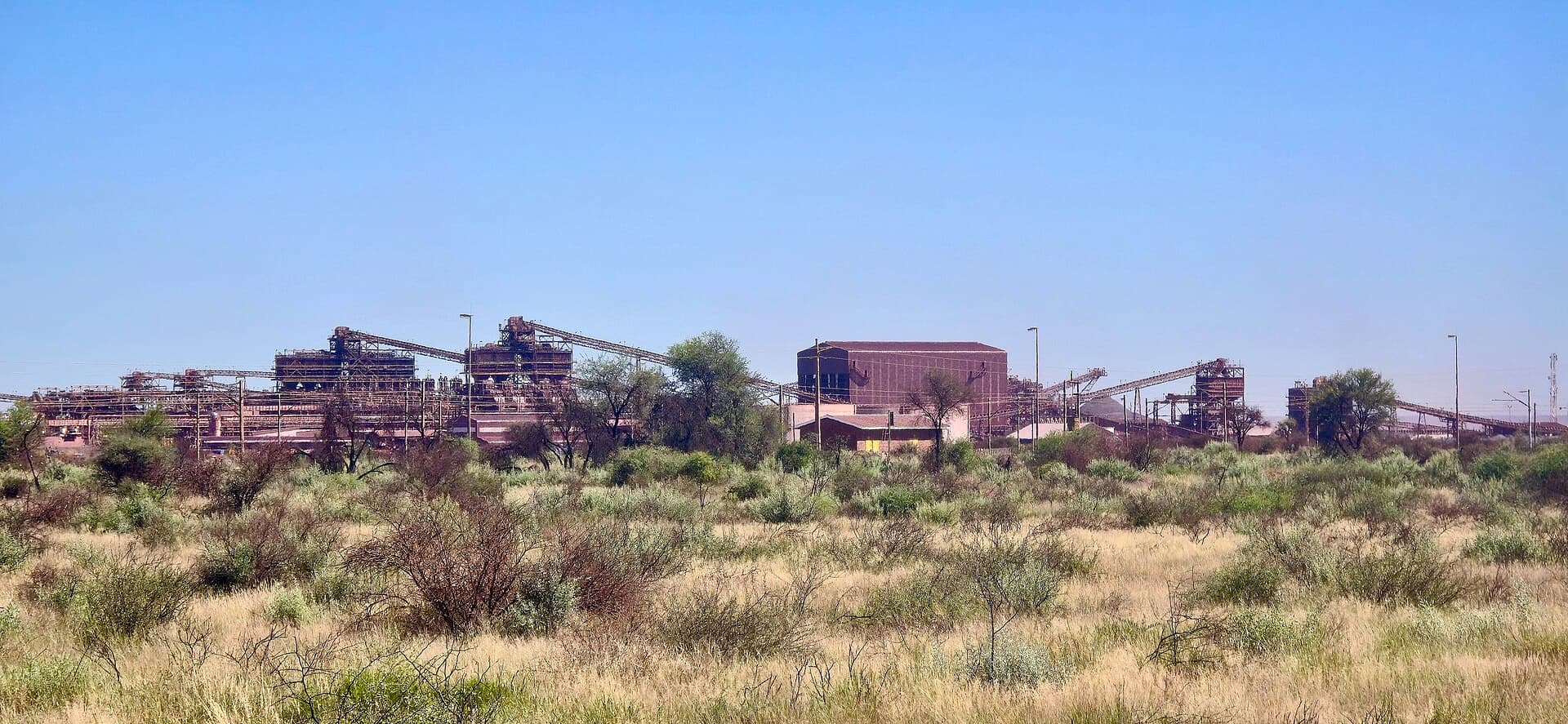
Photo: The Sishen iron ore mine in South Africa, an exporter increasingly diversifying away from a structurally weak Chinese market. Bernard DUPONT from FRANCE, Wikimedia Commons, CC BY-SA 4.0.
Was this useful?
More from MiningWrap

Japan overtakes rivals as China pulls back from SA ferrochrome
The whole sector in one weekly read.
Deals, policy and markets — every Thursday.
Discussion
Loading comments…