Trafigura, Aurubis complete first low-carbon copper sale via Lobito rail
Kamoa Copper's anodes reached Belgium powered largely by renewable-energy transport, demonstrating the corridor's commercial viability
Copper from the Kamoa-Kakula complex in the Democratic Republic of Congo has successfully reached Belgium via the Lobito Corridor for refining, in a shipment that Trafigura, Aurubis and Kamoa Copper say demonstrates the route's viability as a new, efficient export channel for Central African minerals.
The shipment used a supply chain largely powered by renewable energy, resulting in what the companies described as low-carbon-intensive refined copper, distinguishing it from metal produced or transported using conventional fossil-fuel-heavy processes elsewhere in the industry.
Building on the corridor's first shipment
The sale followed Ivanhoe's initial anode shipment to Aurubis via the Lobito Corridor in March, marking a step up from a single proof-of-concept cargo to a completed commercial transaction involving Trafigura as trading intermediary. The corridor is strategically important for Western-backed mineral supply chains, offering a faster alternative for mineral exports than routes through Zambia and South Africa and attracting continued investment from international stakeholders, including the US International Development Finance Corporation.
Selling sustainability, not just metal
The emphasis both companies placed on the shipment's low-carbon credentials reflected a broader shift in how European buyers, particularly in the automotive and renewable-energy sectors, were beginning to differentiate between copper on the basis of its production and transport emissions, not just its price and purity. For Kamoa Copper, being able to market anodes as low-carbon added a further point of distinction beyond the smelter's already high 99.7% purity, at a time when the mine's underlying production volumes remained constrained by the previous year's flooding. The successful commercial sale also gave Trafigura and Mota-Engil, which jointly operate the corridor's Angolan section, a template to pursue further volumes as capacity on the route expanded, even though flood-damaged track further along the same line, cut since April, had yet to fully reopen to rail traffic. That the sale could still be completed, using a combination of rail and road links around the affected section, mattered to Western governments backing the corridor as a counterweight to Chinese-linked trade routes, who wanted proof the route could function under pressure, not just in ideal conditions.
Sources
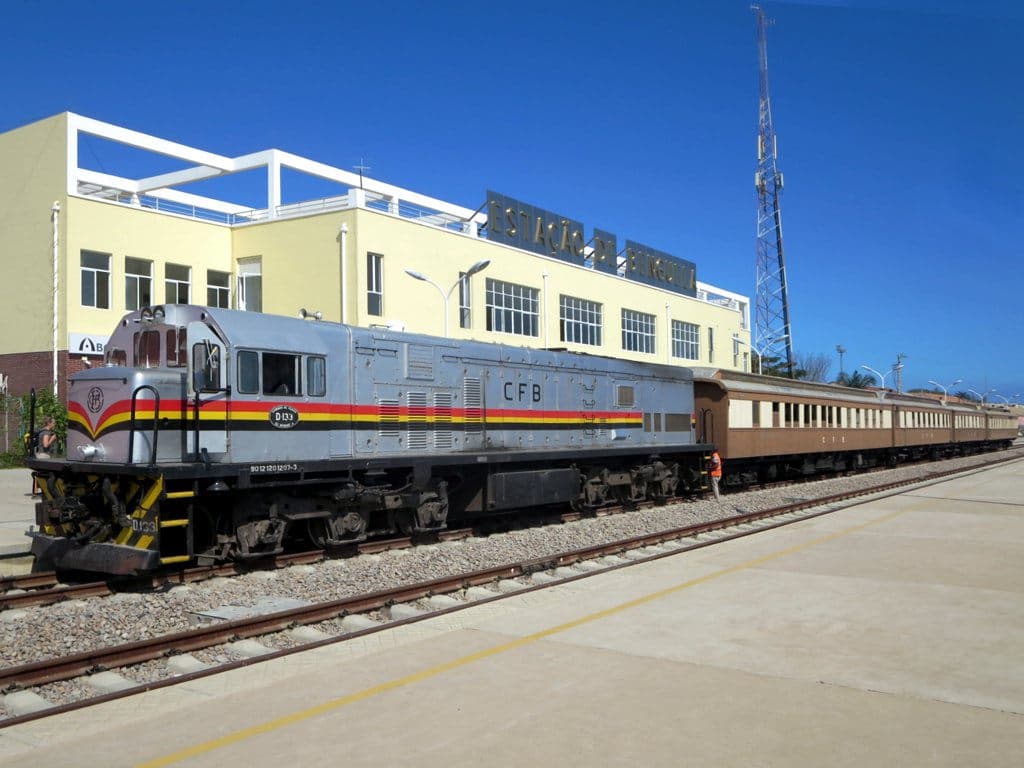
Photo: A railway station on the Benguela line, part of the Lobito Corridor linking DRC copper mines to the Atlantic coast. David Stanley from Nanaimo, Canada, Wikimedia Commons, CC BY 2.0.
Was this useful?
More from MiningWrap
Lobito Corridor operator plans to double mineral cargo in 2026
Lobito rail resumes Congo copper shipments after flood repairs
Lobito Atlantic Railway restarts DRC copper trains after flood damage
Kamoa-Kakula's copper smelter ships first anodes via the Lobito Corridor
The whole sector in one weekly read.
Deals, policy and markets — every Thursday.
Discussion
Loading comments…