Cabinet releases revised Electricity Pricing Policy for comment
Cabinet approved publication of a Revised Electricity Pricing Policy, replacing the 2008 version, to unbundle tariffs and regulate prices between generators, traders and customers, alongside a market transformation position paper.
Department of Electricity and Energy
South Africa
- Draft
- Comment
- In force
At a glance
- Consultation
- Policy
- Department of Electricity and Energy
- South Africa
- All minerals
- 30 July 2026
South Africa's Cabinet has approved publication of a Revised Electricity Pricing Policy for public comment, the first rewrite of the framework for electricity tariffs since 2008. The decision, announced on 30 July 2026, comes as power prices, rather than load-shedding, have become the main electricity concern for energy-intensive industries such as mining and smelting.
What the policy proposes
Cabinet said the policy will strengthen the regulatory framework for electricity prices, tariffs and charges and improve transparency by unbundling tariffs into generation, transmission, distribution and retail components. It consolidates arrangements for pricing at the interfaces between market participants, including between generators and traders, and sets out how Nersa will regulate those interfaces. It is intended to support cost-reflective tariffs while protecting vulnerable users and strategic economic sectors.
Cabinet also approved publication of a draft Electricity Sector Market Transformation Position Paper, which outlines how the country will move from a state-controlled system to a competitive market in line with the Electricity Regulation Amendment Act and the Energy Action Plan. Cabinet said the reforms aim to reduce reliance on a single supplier, attract investment in generation and grid infrastructure and lower costs over the long term.
The price backdrop
Household electricity prices have more than doubled over the past five years. Eskom's regulated tariff rose by about 8.8% from April 2026, with a similar increase due in the 2027 financial year. For the mining industry, which has seen tariffs increase roughly tenfold since 2008, pricing determines whether smelters, deep-level mines and new beneficiation projects remain viable. The Minerals Council has blamed tariff increases for the collapse of the ferrochrome industry.
How it fits
The policy is one of several instruments being finalised in 2026, alongside Nersa's electricity trading rules and the launch of the South African Wholesale Electricity Market. Mines will be looking at how 'strategic economic sectors' are defined, whether special pricing for smelters, such as the concessionary tariff approved for ferrochrome producers in May 2026, becomes a policy tool rather than an exception.
Sources
- BusinessTech: Big changes coming for electricity prices in South Africa, 30 Jul 2026
- News24: The end of Eskom's monopoly? Cabinet approves new electricity pricing policy, reform roadmap, 30 Jul 2026
- Miningmx: Chrome export levy resurfaces in new industrial strategy, 09 Jun 2026
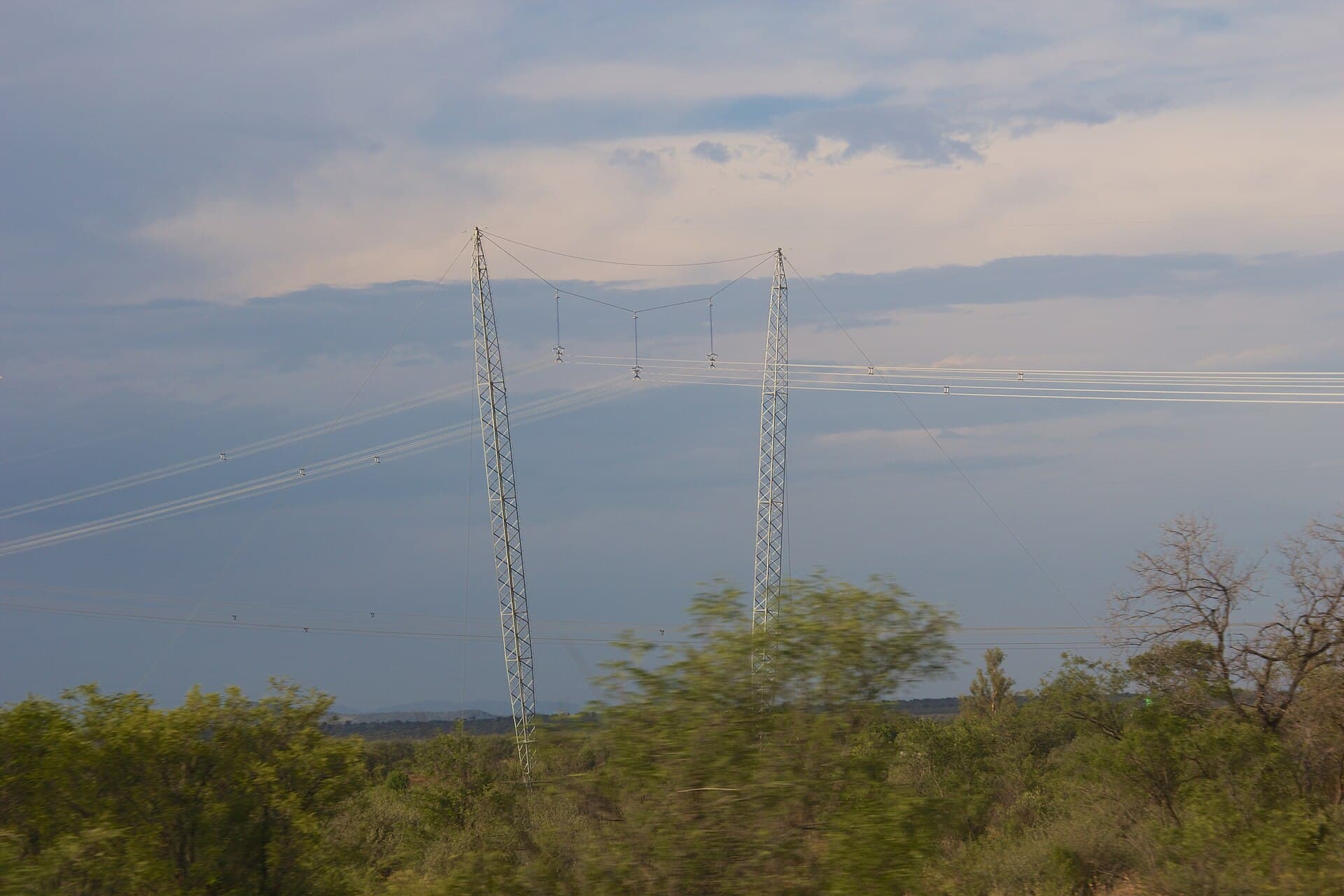
Photo: Electricity transmission lines crossing the South African landscape. Photograph by Mike Peel (www.mikepeel.net)., Wikimedia Commons, CC BY-SA 4.0.
Was this useful?
Discussion
Loading comments…