Niger's Tiani says 95,000 tonnes of yellowcake ready to go back to Orano
Military ruler drew a line under uranium produced before nationalisation, but claimed everything mined since as Niger's own
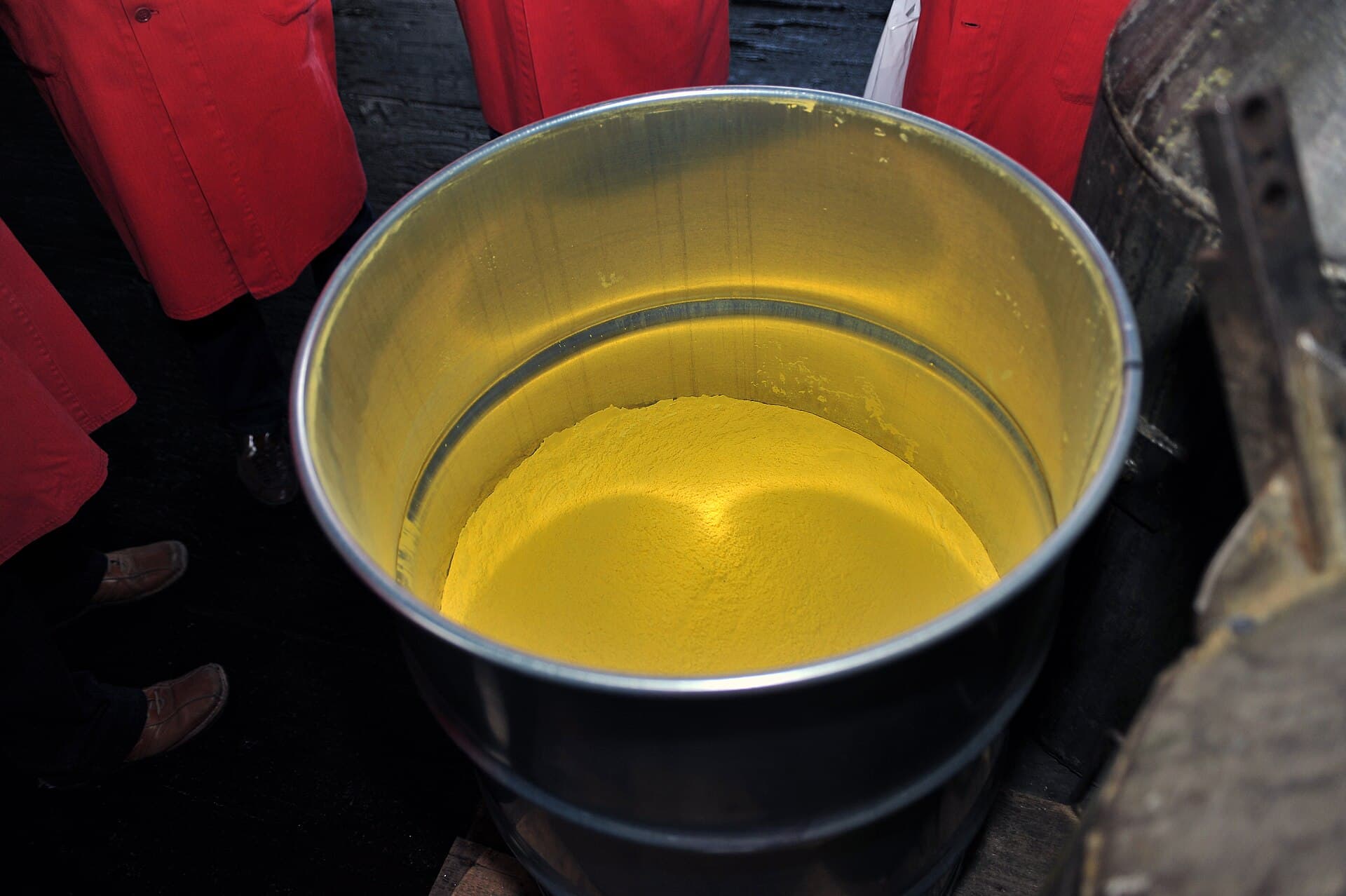
Niger's military ruler, General Abdourahamane Tiani, said in a televised interview that about 95,000 tonnes of concentrated uranium powder — yellowcake — is ready to be sent back to French nuclear group Orano, drawing a line under material produced before the state took control of the Somaïr mine.
A partial concession
Tiani's offer applies only to uranium Orano can show was produced under its own operational control. He said that everything mined afterwards is Nigerien property and will remain so, a position that keeps the core of the dispute over Somaïr's ownership and future output unresolved even as it offers a possible partial resolution over historic stock.
Context: a year of escalating confrontation
The statement came after more than a year of deteriorating relations between Niamey and Orano, which lost operational control of Somaïr in December 2024 before the mine was formally nationalised in June 2025. An ICSID tribunal had ordered Niger in September 2025 not to sell or transfer uranium held at the site, and Niger had separately signalled its intent to sell uranium on the international market regardless of that order.
Why the distinction matters
By offering to release material produced under Orano's watch while asserting ownership over everything since, Tiani's government appears to be trying to limit legal exposure over the pre-nationalisation stockpile while preserving its claim to the mine's ongoing output. For Orano and its French utility customers, recovering historic material would restore some supply certainty, but it does nothing to secure future Nigerien uranium, which the state now intends to market itself.
What it means for the uranium trade
Niger was once among the world's leading uranium producers, supplying a meaningful share of France's nuclear fuel needs through Areva and then Orano. Its nationalisation drive, mirrored in similar moves across the Sahel's mining sector, has forced European utilities to look elsewhere for supply even as global demand for uranium rises with the expansion of nuclear power.
Sources
Photo: Yellowcake, the concentrated uranium powder produced at mines such as Niger's Somaïr. IAEA Imagebank, Wikimedia Commons, CC BY-SA 2.0.
Was this useful?
More from MiningWrap
The whole sector in one weekly read.
Deals, policy and markets — every Thursday.
Discussion
Loading comments…