South Africa's exploration drought: seven years of decline and what might end it
Prospecting spend has fallen more than 85% in three decades. The state's new funds and mapping help at the margin, but the real bottlenecks are administrative
About this piece
- Analysis
- All minerals
- 29 May 2026
- 5 min
- exploration, south africa, policy, critical minerals, rare earths, financing
Every mine starts with a drill hole, and South Africa is drilling fewer of them every year. Stats SA data published in March showed exploration spending of R738m in 2025, measured in constant 2015 prices, 5.3% less than in 2024. It was the seventh consecutive annual decline, and prospecting investment has fallen by more than 85% over three decades, Bloomberg reported. The Minerals Council called exploration the industry's "lifeblood" and described the decline as deeply troubling.
The contrast with the rest of the continent is stark. S&P Global's annual survey, reported by Business Day in April, found that global non-ferrous exploration budgets fell 1% to $12.4bn in 2025, a third consecutive decline. Africa went the other way, with budgets up 11% to $1.44bn. Côte d'Ivoire and the Democratic Republic of Congo led the increase. South Africa, which the mines department estimates now receives less than 1% of global exploration spending against more than 5% two decades ago, did not share in it.
Not a geology problem
South Africa is not running out of minerals. Its mineral sales rose 7.3% to R861bn in 2025, according to the same Bloomberg report. The Bushveld Complex, the Northern Cape manganese and iron ore fields and the Witwatersrand remain world-class. What has changed is the likelihood that an explorer who finds something will be able to secure and develop it on predictable terms.
Investor surveys reflect this. In the Fraser Institute's 2025 survey of mining companies, published in March, South Africa ranked 57th of 68 jurisdictions for overall investment attractiveness. That put it behind Tanzania at 34th, the DRC at 50th and Zambia at 25th. The previous year, South Africa's policy perception score had fallen from 40.59 to 19.47, ranking it 64th of 86 on that measure. Namibia, next door, scored 78.96. Countries with weaker institutions and more difficult security outrank South Africa, which suggests investors are pricing the country's administrative risk above its geological potential.
The state's response
The government has acknowledged the problem and put some money behind it. In his budget vote speech on 19 May, Mantashe gave these figures:
- The Junior Mining Exploration Fund, launched with R400m from the department and the Industrial Development Corporation, has grown to R1bn after Anglo American pledged R600m. It has 13 active projects, including rare earths near Bothaville in the Free State and copper, nickel and gold around Giyani in Limpopo.
- Onshore geoscience mapping coverage has expanded from under 5% of the country in 2019 to 20% by the 2025/26 financial year.
- A PIC continuation fund of R1.35bn has been set aside for exploration.
- The Council for Geoscience is allocated R666.9m in the department's R2.86bn budget for 2026/27.
The department's critical minerals strategy aims to restore South Africa's share of global exploration spending to 5%.
These are sensible steps, but the scale matters. Global junior exploration budgets were $4.39bn in 2025, according to S&P. A R1bn fund, roughly $60m at the exchange rate Bloomberg used for the Stats SA figures, spread over 13 projects is useful seed capital, but it cannot on its own produce a pipeline of new mines. Mapping is more important in the long run. High-quality public geoscience data lowers the cost of early-stage work for everyone, and the coverage figures are improving. On our arithmetic, however, the current pace of about 2.5 percentage points a year would still leave most of the country unmapped at the end of the decade.
The real bottleneck: getting and holding a right
The bigger obstacles are administrative. The online mining cadastre was first promised for June 2025. It began a limited rollout in the Western Cape, a province with little mining, and in May the Minerals Council said it had still not been shown a working demonstration. Chief executive Mzila Mthenjane said that the longer the delay lasted, the less confident the industry became about the final product. The Daily Maverick has reported large application backlogs at regional offices and suspicions of corruption in permit processing.
Legal uncertainty adds to this. The draft Mineral Resources Development Bill of May 2025 originally applied empowerment ownership requirements to prospecting rights, which would have forced explorers to give away equity before proving any value. Mantashe withdrew that within weeks, which helped. But the bill's second draft is not expected until later this year. Until it is published, explorers do not know how change of control, historic dumps or future empowerment regulations will be treated.
A paper by Economic Research Southern Africa, cited by Bloomberg, argued that an underdeveloped junior sector has led to the effective collapse of South Africa's project pipeline. It proposed tax rebates for exploration, a transparent database of available mineral rights and more funding for geological mapping. The department is working on the third, but the first two have seen little progress.
Our view: fix the front door first
We would rank the priorities as follows.
1. A working national cadastre. An open, first-come-first-served online register that shows which ground is available and processes applications within set time limits would do more for exploration than any state fund. Online cadastres of this kind are standard in leading mining jurisdictions. A contractor was appointed to build South Africa's in 2024, so what remains is a matter of delivery and political priority.
2. An exploration tax incentive. Canada's flow-through share regime, which lets juniors pass exploration deductions to the investors who fund them, is the best-known model. Without something similar, a South African investor who funds a failed drilling programme carries the whole loss. A modest rebate would bring private money in alongside the state fund.
3. Use it-or-lose-it rules that are actually enforced. Where prospecting rights are held without meaningful work, enforcing the work commitments already in the law, through a transparent cadastre, would free ground for active explorers without new legislation.
The Junior Mining Exploration Fund and the mapping programme show that government and industry agree on the diagnosis. The mining sector's contribution to GDP, 6.3% in 2025 according to the department, is about where it was when the Mining Charter was introduced in 2004. New mines are the only way to raise it, and more drilling is the first step. The minister's budget speech gave some cause for optimism, but the next Stats SA exploration release will be the real test.
Sources
- MINING.COM / Bloomberg: South African mining exploration falls for seventh straight year, 13 Mar 2026
- Business Day: Gold drives mining exploration as global budgets fall for third year, 09 Apr 2026
- ZambiaInvest: Zambia Ranks 3rd in Africa for Mining Investment as Improved Policy Framework Boosts Global Ranking, 06 Mar 2026
- Miningmx: SA almost vanishes from Fraser Institute policy radar, 05 Aug 2025
- Department of Mineral and Petroleum Resources: Remarks by the Minister of Mineral and Petroleum Resources, Mr Gwede Mantashe, Budget Vote 34, Cape Town, 19 May 2026, 19 May 2026
- Daily Maverick: SA mining sector gatvol with DMPR over endless cadastre delay, 27 May 2026
- Miningmx: Minerals Council losing confidence in Govt's mining cadastre, 27 May 2026
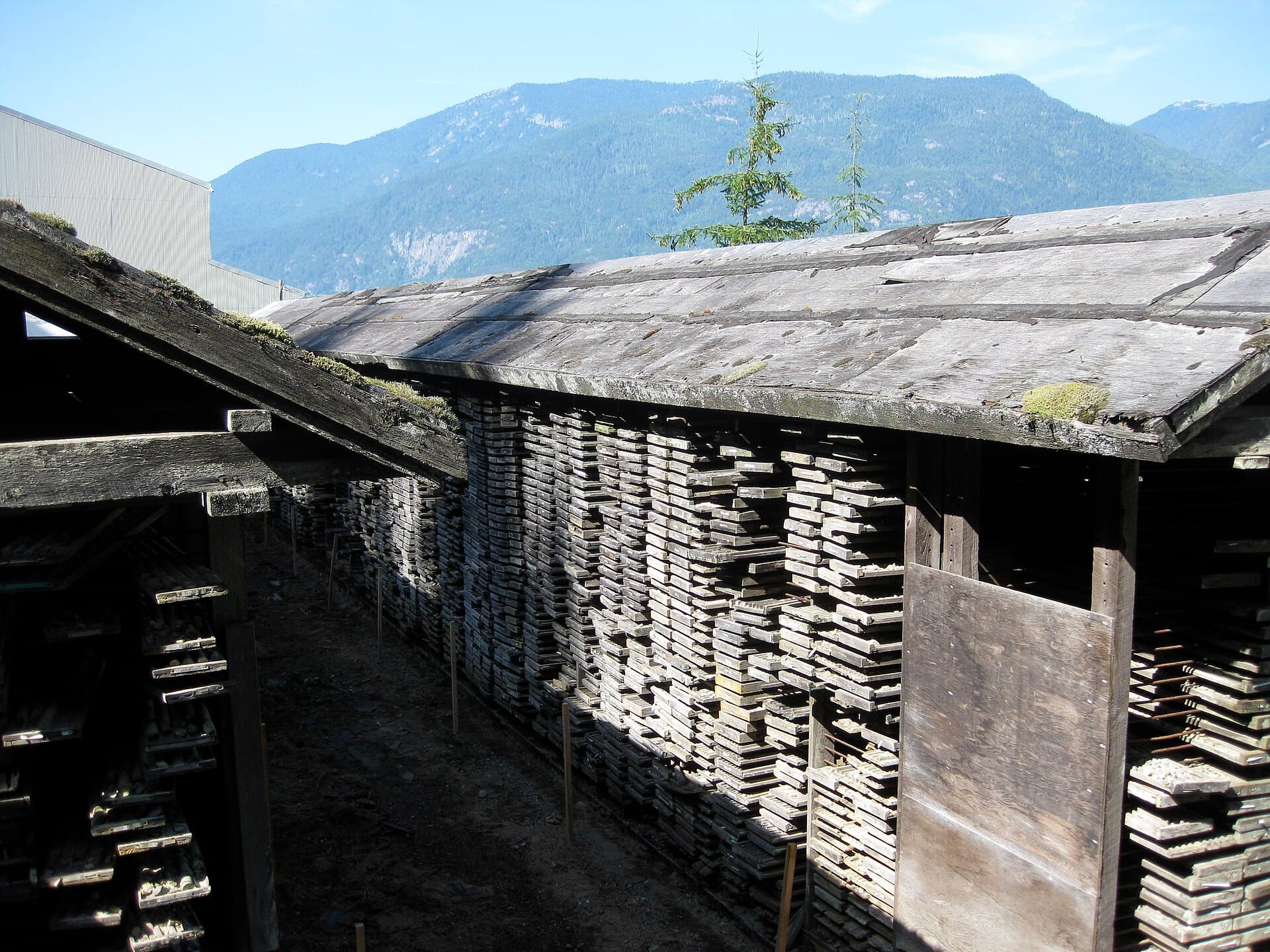
Photo: Rock core samples recovered with diamond-tipped drills. Phil Whitehouse from London, United Kingdom, Wikimedia Commons, CC BY 2.0.
Was this useful?
Discussion
Loading comments…