Revoke, nationalise, tender: Guinea's new model for its bauxite
A year after taking Emirates Global Aluminium's concession, Conakry is turning a state shell company into a bauxite producer and selling its ore by auction
About this piece
- Analysis
- Bauxite, iron ore
- 13 August 2026
- 5 min
- guinea, bauxite, iron ore, policy, beneficiation, china
A little over a year ago, Nimba Mining Company did not exist. By August 2026 the wholly state-owned company said it had exported more than five million tonnes of bauxite since it was set up, and it was targeting 10 million tonnes of shipments for the year. Mines minister Bouna Sylla told Reuters that Nimba would sell part of its output through monthly tenders open to Mercuria, Glencore, Rio Tinto and Vedanta, among others. Glencore had already been chosen, through an international tender, as the anchor buyer for a guaranteed minimum volume, though the final contract was still being negotiated.
That sequence, from revocation to state ownership to competitive sale, is new in African mining. It deserves attention from any company with assets in a jurisdiction that has a dominant resource and a government willing to use it.
How Guinea got here
The campaign began quietly. In May 2025 the government revoked 46 mining licences, possibly as many as 53, according to government sources who spoke to Reuters. The permits covered bauxite, gold, diamonds and graphite. Analysts described most of them as small and underperforming, and the market impact was negligible. What the revocations did was establish that the military-led government would take back rights it considered idle.
The real target became clear within months. Guinea Alumina Corporation (GAC), the local subsidiary of Emirates Global Aluminium, had promised to build an alumina refinery. The original deadline of 2022 had been extended to September 2026. Guinea suspended GAC's bauxite exports from October 2024. In July 2025 it terminated the basic agreement behind the concession, and it moved the lease to Nimba under a renewable 25-year term. Bloomberg, cited by Miningmx, reported that GAC's exports had dropped from 14Mt to 10.8Mt because of the suspension even before the concession was taken.
This was no marginal operator. EGA had built a mine, rail links and export facilities in the Boké region. Taking a concession from a company owned by Gulf state investors, after it had put that much capital into the ground, showed that Conakry was prepared to accept a political cost.
The settlement
The dispute was settled in May 2026, according to Business Insider Africa's account. GAC's assets were transferred to Nimba to develop the Sangarédi bauxite project, and Guinea agreed to make a lump-sum payment to GAC. The value was not disclosed. EGA's bauxite supply was restored on commercial terms through Compagnie des Bauxites de Guinée, the long-established producer.
The outcome is instructive. EGA lost its mine but kept its feedstock, which is what an aluminium smelter mainly needs. Guinea gained a producing asset and export infrastructure without paying the full cost of building them. As in Mali's settlement with Barrick, both sides chose a negotiated exit over years of arbitration. The difference is that in Guinea the state kept the asset.
Why Guinea can do this
Guinea's leverage comes from scale. It exported a record 182.8Mt of bauxite in 2025, making it the world's largest exporter. Much of that ore is shipped to China's alumina refineries, and no other country can supply bauxite at comparable scale. A buyer who needs Guinean bauxite cannot easily avoid Guinean policy. Nimba's targets are modest against the national total: at least 14Mt a year within two to five years, with capacity rising to 12Mt from 2027. Guinea does not need Nimba to dominate. It needs Nimba to show that the state can run a bauxite business profitably.
Iron ore adds a second source of leverage. Simandou shipped its first cargo in late 2025 and China received its first fully integrated 200,000-tonne shipment in March 2026. At full capacity, all four blocks are expected to produce up to 120Mt a year of ore averaging about 65% iron. Ownership has moved further towards Beijing. In January, China Baowu's mining arm raised its stake in Winning Consortium Simandou, which operates blocks 1 and 2, from 49% to 51%. Blocks 3 and 4 are developed by Simfer, a partnership of Rio Tinto, Chinalco and the Guinean state. The two groups share more than 600km of rail and a new port.
Our view: a model that works while the ore is scarce
The tender system is the most interesting part of Nimba's plan. Most African state mining companies have been passive shareholders that take a carried interest and wait for dividends. Nimba intends to sell its own ore on the open market, with a guaranteed base volume and monthly spot sales on top. If it works, Guinea sees the market price of its bauxite directly, rather than relying on transfer prices set inside integrated aluminium groups. That is useful information for a government that wants to tax the industry properly.
There are three risks.
First, operating a mine is different from owning one. Nimba inherited GAC's infrastructure and, presumably, many of its workers. Keeping a mine, railway and port running at 10Mt to 14Mt a year requires maintenance budgets, spare parts and technical staff that state companies in the region have often struggled to fund. Hitting the 2026 shipment target would be a meaningful signal. Missing it would be one too.
Second, the refinery requirement has not gone away. Guinea's quarrel with EGA was about a promised alumina refinery. Nimba is now expected to expand into alumina, gold and base metals. If the state cannot build the refinery it demanded of a private company, the policy's credibility will suffer. Business Insider Africa has reported that China's largest state-owned alumina producer plans a $1bn alumina plant in Guinea. Projects like that are the more likely route to local refining.
Third, every other bauxite licence holder has been put on notice. Companies that promised refineries or infrastructure in their conventions should assume that deadlines will be enforced. They should also assume enforcement may take the form of revocation rather than fines. The May 2025 licence purge and the GAC seizure point the same way. Guinea wants its minerals developed on its timetable, and it is prepared to change who does the developing.
For investors, the practical lesson is to read concession obligations as binding conditions, not aspirations. The countries that can enforce them are those with ore the world cannot easily replace, and Guinea is one of them. For now, the numbers favour Conakry.
Sources
- Business Insider Africa: World's top bauxite exporter Guinea is building its own mining giant with 14 million-tonne target, 11 Aug 2026
- Reuters: Guinea's Nimba to sell bauxite through monthly tenders, mines minister says, 11 Aug 2026
- TimesLIVE: Guinea revokes 46 mining licences, signalling stricter oversight of major operators, 16 May 2025
- Miningmx: Guinea seizes bauxite mine from Emirates Global Aluminium, 05 Aug 2025
- Business Insider Africa: China's biggest steelmaker eyes BHP mine after taking control of half of Guinea's Simandou project, 05 Sept 2026
- Business Insider Africa: China receives first 200,000-tonne shipment from Africa's largest untapped iron ore project, 31 Mar 2026
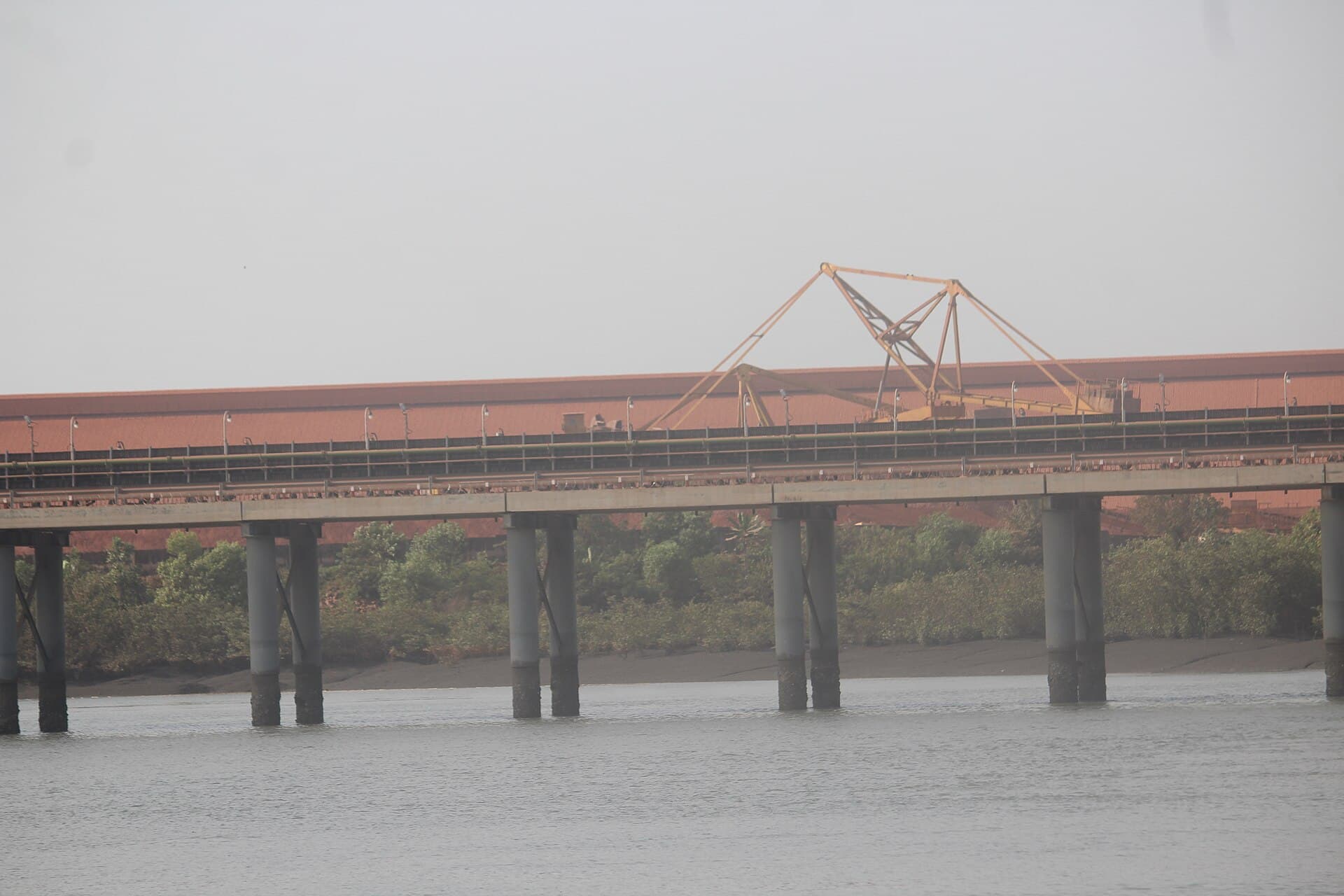
Photo: A bauxite conveyor belonging to Guinea Alumina Corporation at Kamsar, Guinea. Aboubacarkhoraa, Wikimedia Commons, CC BY-SA 4.0.
Was this useful?
Discussion
Loading comments…