
Steenkampskraal Opens First Phase of Commercial Monazite Plant in South Africa
South Africa’s Steenkampskraal Monazite Mine has launched the first phase of its commercial monazite concentrate plant in the Western Cape, marking a move towards domestic processing of rare earth minerals.
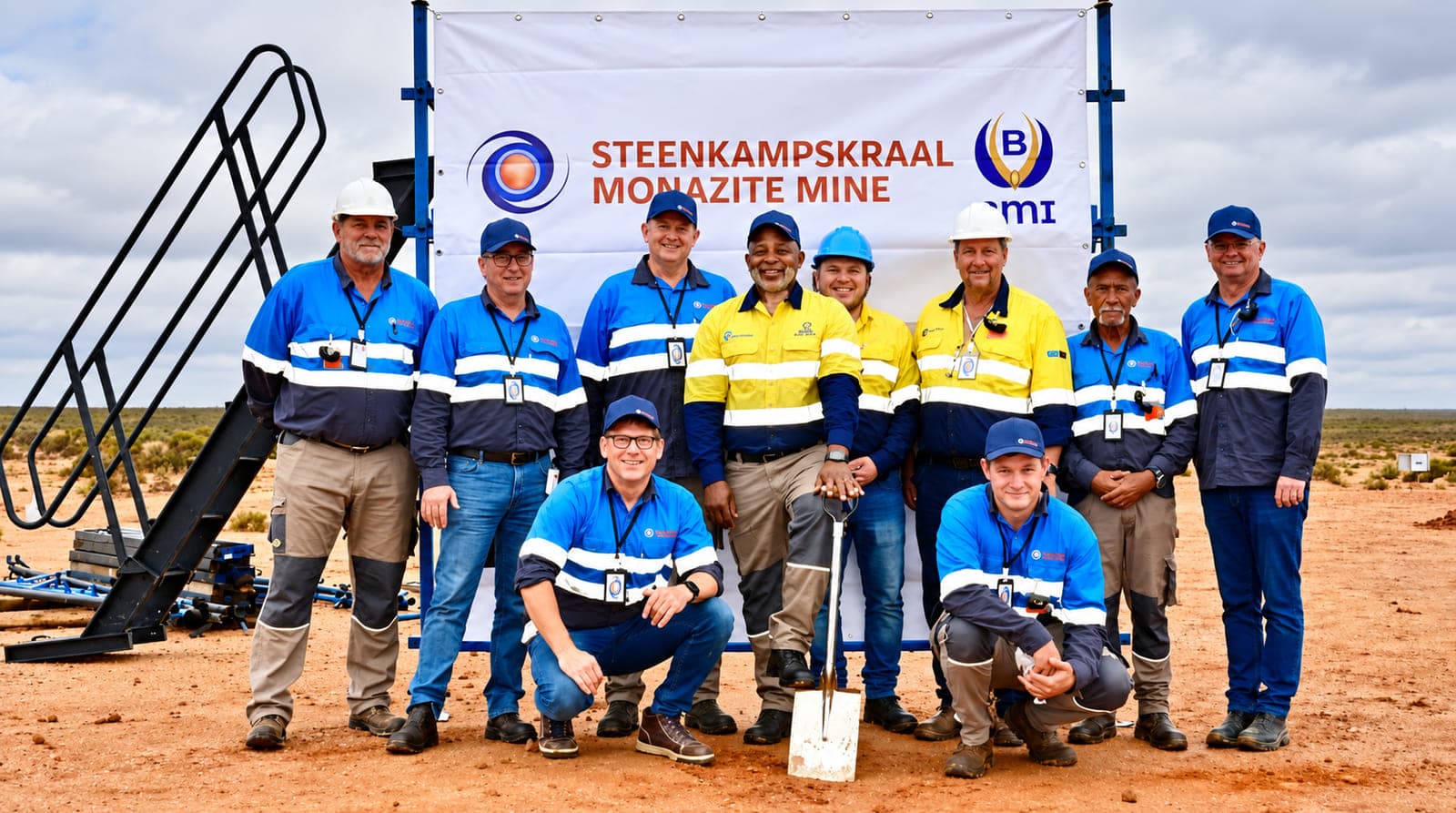
South Africa’s Steenkampskraal Monazite Mine has launched the first phase of its commercial monazite concentrate plant in the Western Cape, marking a move towards domestic processing of rare earth minerals.
The plant was officially opened in October 2026, with funding from the Industrial Development Corporation (IDC). The project moves the mine from laboratory-scale research into commercial mineral processing, with the first export shipments planned before the end of the year. The company has also secured several offtake agreements for its concentrate.
Plant to produce rare earth concentrate
Phase 1 involves crushing and milling ore before using gravity separation and flotation to produce monazite concentrate for export. The plant has a nameplate capacity of 15 tonnes per hour of monazite concentrate, according to International Mining.
Monazite is a phosphate mineral that contains rare earth elements used in technologies such as electric vehicles, electronics, telecommunications and renewable energy systems. These materials are important in the manufacture of permanent magnets, motors and other advanced industrial components.
Steenkampskraal’s deposit is notable for its reported grade of approximately 14.5% total rare earth oxides and around 2.1% thorium. The company describes it as one of the world’s highest-grade rare earth deposits. Its high mineral content could reduce the amount of rock that needs processing for each tonne of rare earth material recovered.
Three phase development plan
The new plant represents the first stage of a wider plan to expand mineral beneficiation in South Africa. The next phases will focus on processing the concentrate further instead of relying primarily on exports.
Phase 2 is planned to involve monazite cracking, a chemical process that breaks down the mineral to release rare earth elements for further processing, alongside thorium recovery. Phase 3 will focus on separating the mixed rare earth product into individual rare earth oxides.
In June 2026, Steenkampskraal and South Africa’s mineral research organisation, Mintek, reported producing high-purity mixed rare earth products in laboratory work. The company sees this achievement as a technical step towards more advanced processing at the mine. IDC funding supports local beneficiation
The IDC’s funding supports the development of processing capacity for a mineral resource that could contribute to South Africa’s participation in global rare earth supply chains.
For the mining sector, the project’s longer-term significance will depend on its ability to move beyond concentrate production into chemical processing and separation. These stages require additional investment, technical expertise, infrastructure and regulatory oversight, particularly because the deposit also contains thorium, a naturally occurring radioactive element.
The immediate milestones are commissioning, achieving consistent production and delivering the first shipments to customers. Progress on the next two phases will determine how much additional processing South Africa can retain locally.
Steenkampskraal’s development adds to the country’s efforts to build domestic capacity in critical minerals. If the later phases proceed as planned, the project could support more specialised processing skills and industrial activity while supplying rare earth materials to international markets.
Was this useful?
More from MiningWrap
Kobaloni targets Europe with Africa's first large-scale cobalt sulphate refinery


The whole sector in one weekly read.
Deals, policy and markets — every Thursday.
Discussion
Loading comments…