Pay strike halts mining at Baowu-led Simandou blocks in Guinea
About 3,000 workers at WCS stopped blasting and hauling over wage parity with Simfer
A wage dispute has stopped mining at the northern half of Guinea's Simandou iron ore project, the first strike at the operation led by China Baowu Steel Group since exports began late last year.
Reuters, as reported by Miningmx on 6 May, said an estimated 3,000 workers at Winning Consortium Simandou (WCS), which operates Blocks 1 and 2, had downed tools. Blasting, loading, hauling and dumping had stopped on 28 April. Rail and port activities were continuing, and management and worker representatives were in talks.
The grievance
Workers accused WCS of failing to implement the unified pay structure that Guinea introduced in 2025 to standardise mining wages across the sector. A source at Baowu, the world's largest steelmaker, confirmed that mining had stopped but said the company complied with the government's salary framework. The workers' underlying demand, according to the report, is parity with employees at Simfer, the venture between Rio Tinto, Chinalco and the Guinean state that is developing the southern Blocks 3 and 4. A government delegation had tried and failed to broker a settlement.
A consultant to the project told Reuters there was no mining activity and that production was directly affected.
Timing
The stoppage came at a sensitive moment in the ramp-up. WCS employed more than 10,000 people during construction and has been reducing its workforce as it moves into operations, a transition that often sharpens labour tensions. Because rail and port work continued, ore already mined could keep moving to the coast, but a long halt at the pits would eventually feed through to shipments.
Simandou holds what is widely described as the world's richest untapped iron ore deposit. It began exporting in late 2025 after decades of delays, and at full capacity the four blocks are designed to produce up to 120 million tonnes a year.
Wider implications
For Guinea, labour peace is part of the social contract that underpins the project. The government has presented Simandou as the engine of its Simandou 2040 development programme, and uniform pay rules were meant to reduce disparities between foreign-owned operations. A prolonged strike would test that framework, while a settlement that narrows the gap with Simfer could raise costs for WCS.
For iron ore markets, the stoppage was a reminder that Simandou's arrival will not be a smooth, linear addition of supply. Traders have been watching monthly volumes out of Morébaya closely for signs of how quickly the new tonnes will reach Chinese ports.
Sources
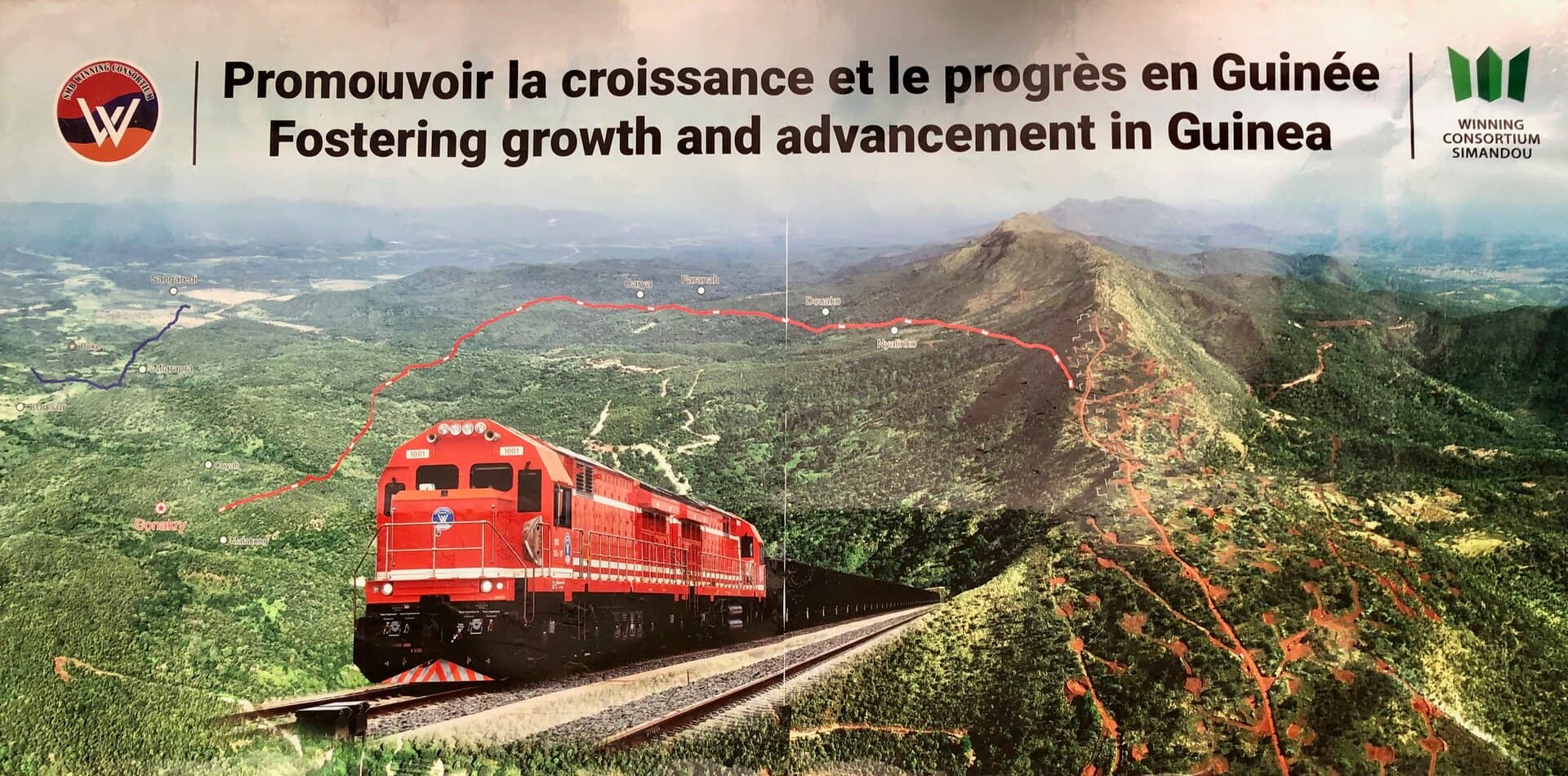
Photo: A Winning Consortium billboard in Guinea advertising the railway being built to the Simandou iron ore project. Flucco, Wikimedia Commons, CC BY-SA 4.0.
Was this useful?
More from MiningWrap

The whole sector in one weekly read.
Deals, policy and markets — every Thursday.
Discussion
Loading comments…