Endeavour Mining books record first-half cash flow as Mana falls short
West Africa's largest gold producer generated $761m of free cash flow in H1-2026 and returned a record $301m to shareholders
Endeavour Mining reported record half-year financial results on 30 July 2026, with its five West African mines producing 564,000oz of gold in the six months to June at an all-in sustaining cost (AISC) of $1,871/oz. Second-quarter output was 283,000oz at $1,907/oz.
The London-listed group, which operates in Burkina Faso, Côte d'Ivoire and Senegal, realised an average of $4,579/oz for its gold in the half, far above the $3,000/oz assumption built into its annual guidance. That price lifted adjusted EBITDA 38% year on year to $1.61bn and adjusted net earnings 69% to $672m, or $2.78 a share.
Cash and returns
Free cash flow for the half reached a record $761m, although the second quarter contributed a more modest $149m as tax payments and capital spending came through. The balance sheet swung to a net cash position of $254m at the end of June.
Shareholders received $301m in the half, split between a $230m dividend and $71m of buybacks covering about 1.2 million shares. Endeavour said this was roughly double its minimum commitment and took cumulative returns since early 2021 to $1.92bn. It has pledged at least $1bn in dividends over 2026 to 2028.
Mine by mine
Ity in Côte d'Ivoire was the largest contributor at 148,000oz, at a group-low AISC of $1,438/oz. Sabodala-Massawa in Senegal delivered 131,000oz and Houndé in Burkina Faso 110,000oz, with Houndé's output expected to be weighted to the second half. Lafigué, Endeavour's newest mine in Côte d'Ivoire, produced 107,000oz and has been running above its design throughput, putting it on course for the top half of its guidance range.
The weak spot was Mana in Burkina Faso, which produced 68,000oz at an AISC of $2,841/oz. The company attributed the shortfall to faster-than-planned depletion of the high-grade Siou deposit and now expects the mine to finish below the low end of its guidance.
Group guidance for 2026 remains 1.09Moz to 1.265Moz at an AISC of $1,600/oz to $1,800/oz, but Endeavour raised its sustaining capital budget to $280m from $230m, largely because Houndé's sustaining spend has been lifted to $90m from $50m. Higher gold prices also mean heavier royalty bills, which feed directly into AISC.
Growth pipeline
The next leg of growth centres on the Assafou project in Côte d'Ivoire, for which Endeavour published a definitive feasibility study on 23 April. The study envisages a 5Mtpa plant producing about 320,000oz a year over a 16-year life, and the company is targeting a final investment decision by the end of 2026.
At Sabodala-Massawa, work on an underground expansion is under way, with first ore targeted by year-end. The group has budgeted $100m for exploration this year and expects resource updates at Vindaloo Deeps near Houndé and Kawsara at Sabodala-Massawa in the second half.
For West Africa's gold sector, the results show how high prices are cushioning operational slippage: even with Mana underperforming and costs rising, Endeavour is generating enough cash to fund Assafou, keep paying dividends and hold net cash.
Sources
- GlobeNewswire (Endeavour Mining release): Endeavour Reports Strong H1-2026 Results, 30 Jul 2026
- Investing.com: Earnings call transcript: Endeavour Mining posts Q2 2026 EPS beat, 30 Jul 2026
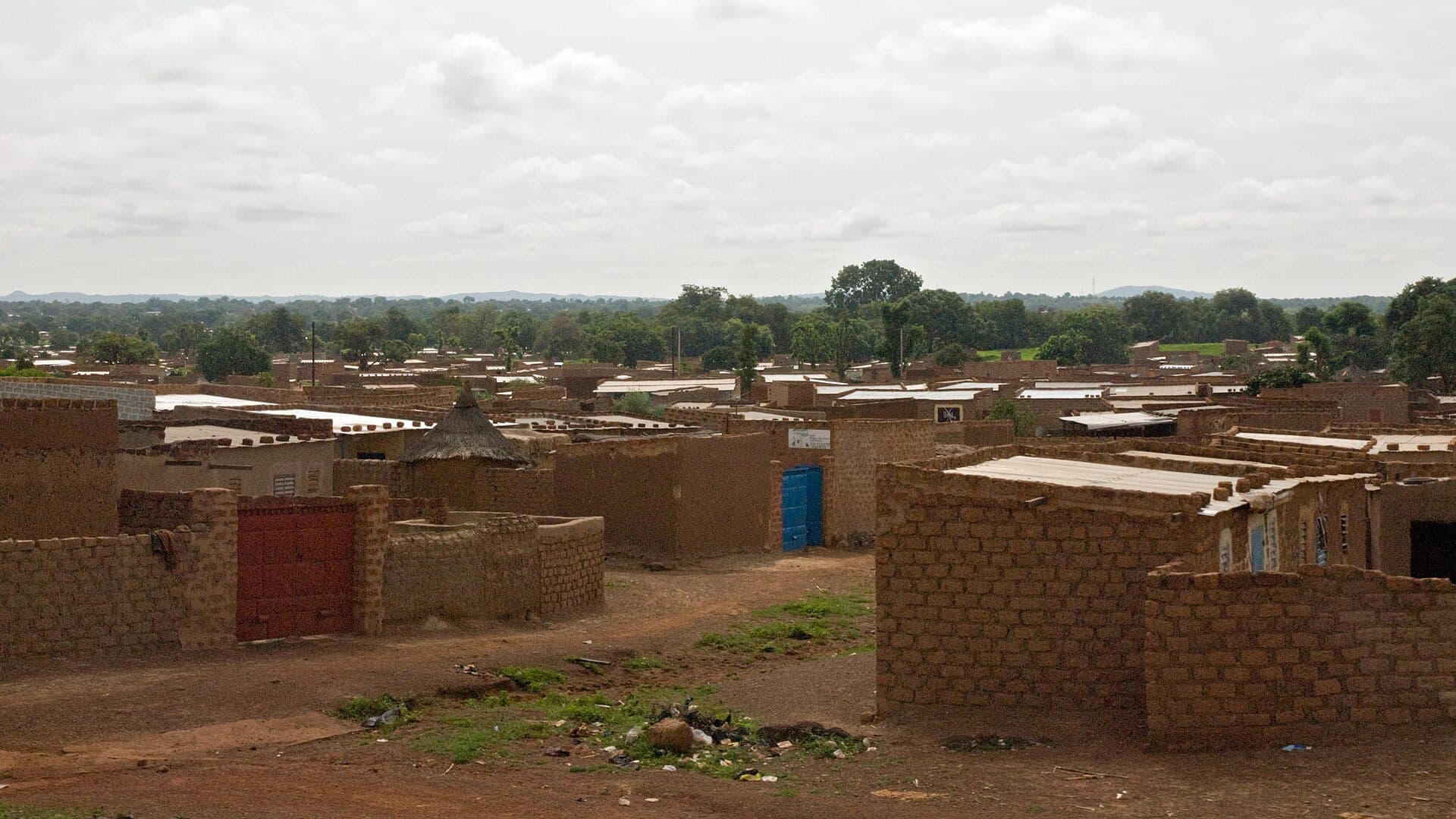
Photo: The town of Houndé in Burkina Faso's Hauts-Bassins region, where Endeavour operates its Houndé gold mine. Rik Schuiling / TropCrop-TCS, Wikimedia Commons, CC BY-SA 4.0.
Was this useful?
More from MiningWrap
The whole sector in one weekly read.
Deals, policy and markets — every Thursday.
Discussion
Loading comments…